Search
Moving, rotating or turning tools and moulds weighing several tonnes: in tool and mould making, this is part of everyday work. At the same time, it is precisely these processes that are among the work stages where safety, ergonomics and efficiency are particularly important.
This is because, when handling heavy moulds, high loads are combined with confined spaces, complex movements and, frequently, manual labour. Improvised processes or unsuitable aids can not only endanger staff, but also damage tools and disrupt production processes.
The crucial question is therefore:
How can mould handling be organised so that staff can work more safely and ergonomically – without compromising on Productivity and cost-effectiveness?
Why mould handling poses particular challenges for health and safety
Moulds and tools are not only heavy, but often also large, unwieldy and expensive. When they need to be moved or turned for maintenance, cleaning or repair work, this presents particular challenges.
This begins with the very act of slinging and lifting. Added to this are controlled rotating and turning manoeuvres, as well as the safe positioning of the mould. The more manual intervention is required, the greater the risk to the staff involved can become.
Typical challenges include, for example:
- uncontrolled movements of heavy loads,
- crushing and pinching hazards,
- physically demanding working positions,
- high manual exertion,
- unsuitable or improvised anchor points,
- damage to high-value moulds and tools.
For plant managers and those responsible for health and safety, this means that mould handling should not be viewed as an isolated lifting operation. What is crucial is the entire process, from slinging through to moving, turning and safe positioning.
Ergonomics means more than just reducing physical strain
When it comes to ergonomics, many people initially think of lifting heavy objects. However, mould handling involves much more than that.
Employees may have to perform sling positioning, guide heavy components or control movements. Depending on the Traversing method used, this can result in awkward postures or high levels of physical strain.
An ergonomic mould-handling process therefore pursues a clear objective: The employee should be able to control the load without becoming a key component of the load-handling process themselves.
Technical solutions can help to reduce manual tasks and move heavy tools in a more controlled manner. This not only improves ergonomics; standardised procedures can also make processes more reproducible and efficient.
1. Creating secure anchor points
A safe handling process begins at the interface between the tool and the lifting gear.
Suitable anchor points make it possible to secure moulds and tools in a defined manner and to safely transfer the forces involved. Particularly in the case of recurring handling processes, standardised anchor points can help to avoid improvised solutions.
RUD offers a range of anchor points and solutions designed to meet the requirements of handling heavy moulds and tools.
For maintenance, this means above all: clearly defined anchor points, reproducible procedures and less improvisation during day-to-day handling.
2. Rotating moulds in a controlled manner instead of risky improvisation
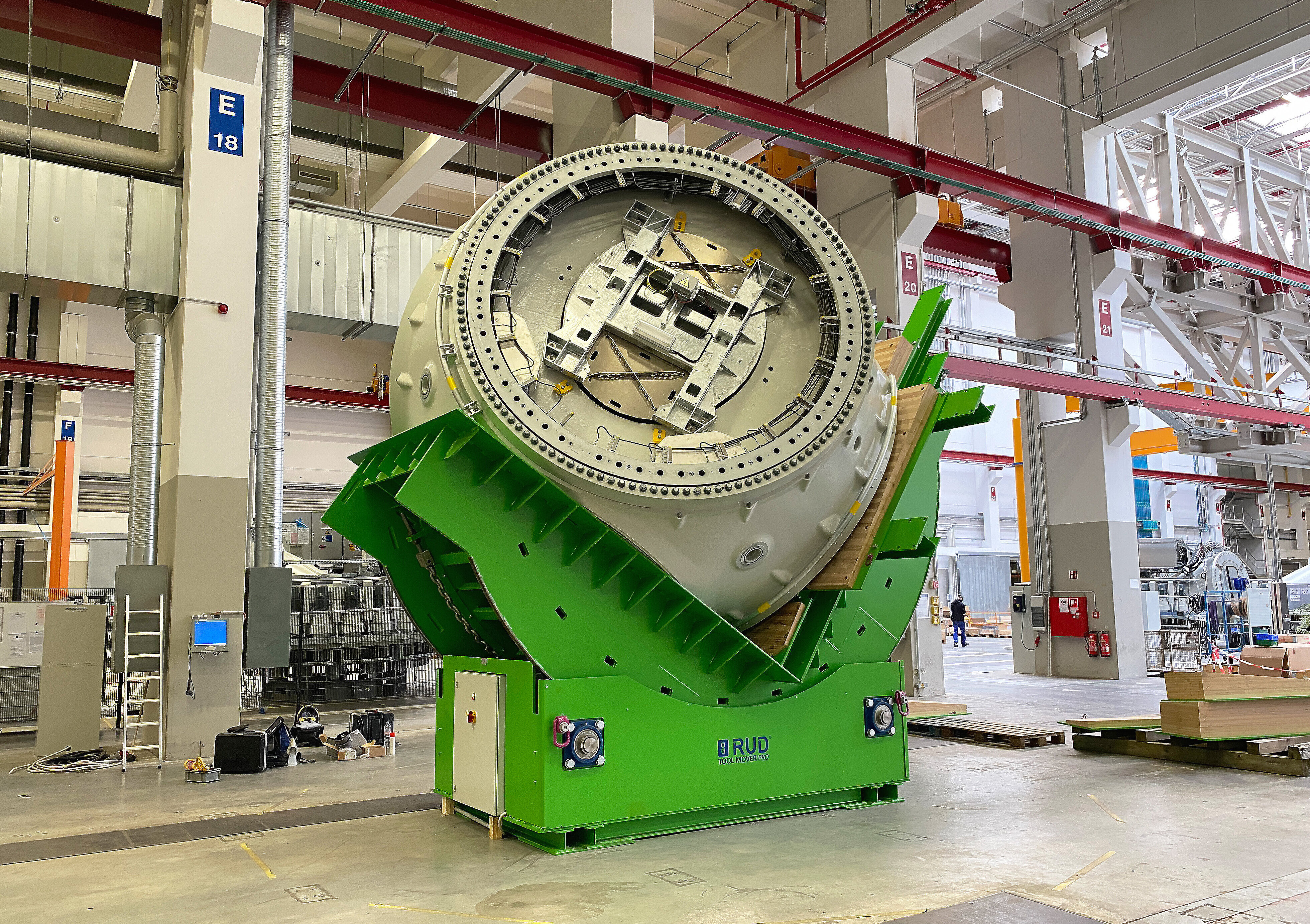
Rotating heavy moulds is one of the most demanding tasks in mould handling. Particularly during maintenance, cleaning or repair work, moulds frequently need to be rotated by 90 or 180 degrees.
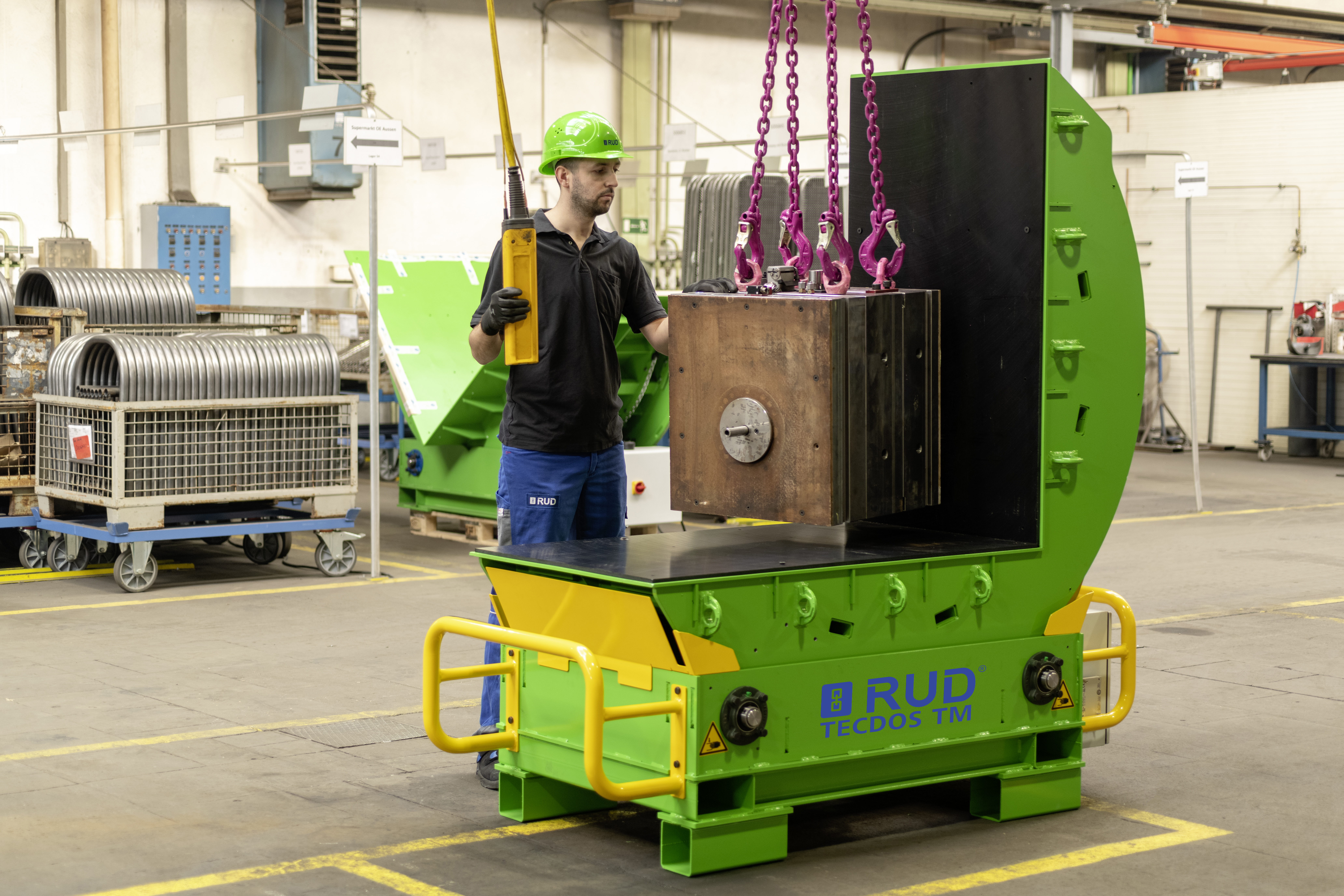
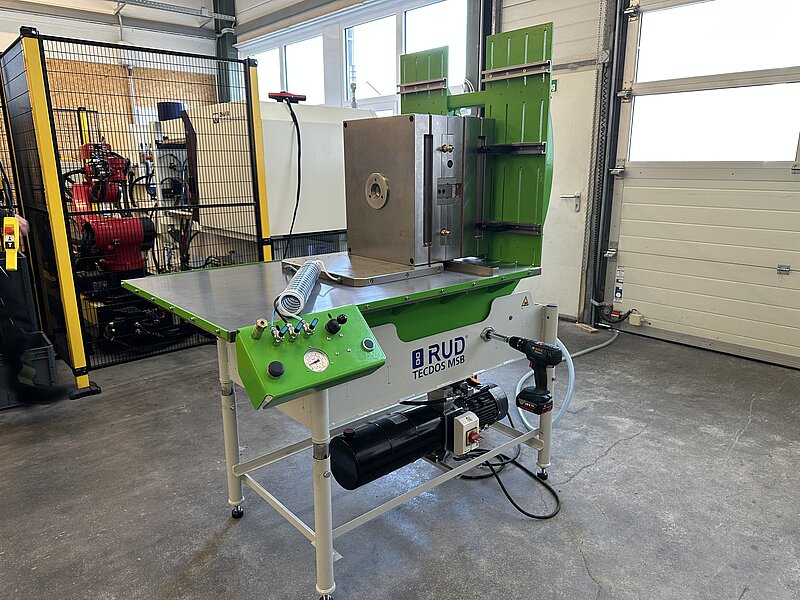
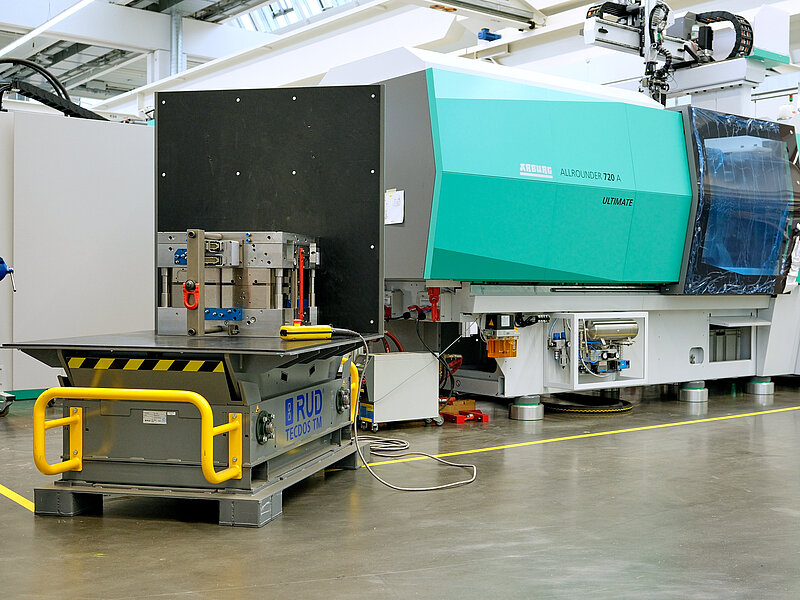
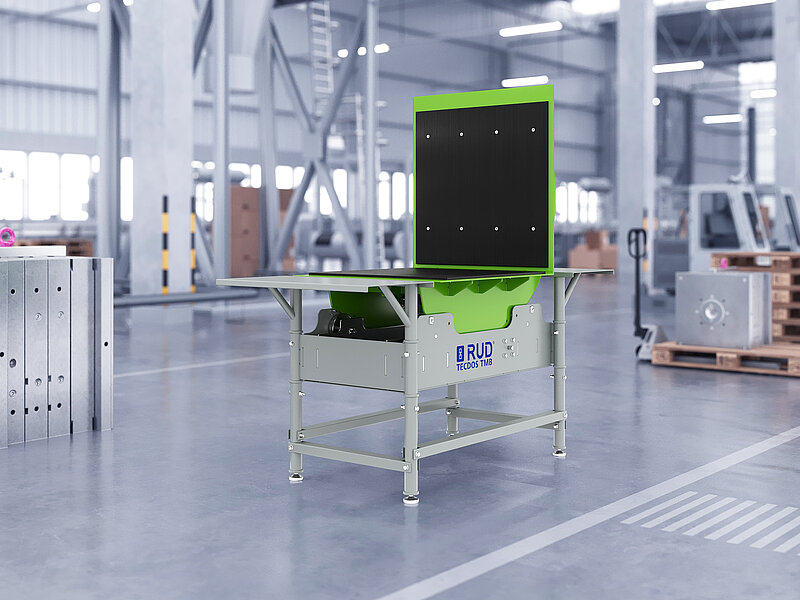
The RUD TECDOS TM was developed precisely for this task.
This mould turner enables heavy moulds and tools to be turned in a controlled manner. Instead of rotating the mould using conventional methods and multiple steps, the rotating process is carried out by a system specifically designed for this purpose.
This offers several advantages at once:
- controlled turning of heavy moulds,
- fewer manual interventions during the turning process,
- improved ergonomics for staff,
- reduced risk of uncontrolled load movements,
- protection of high-quality moulds and tools, and
- reproducible work processes.
For plant managers and those responsible for health and safety in particular, it is crucial to note that the turning process is not viewed solely in terms of speed, but as a defined and controllable work step.
3. Creating distance between the operator and the load
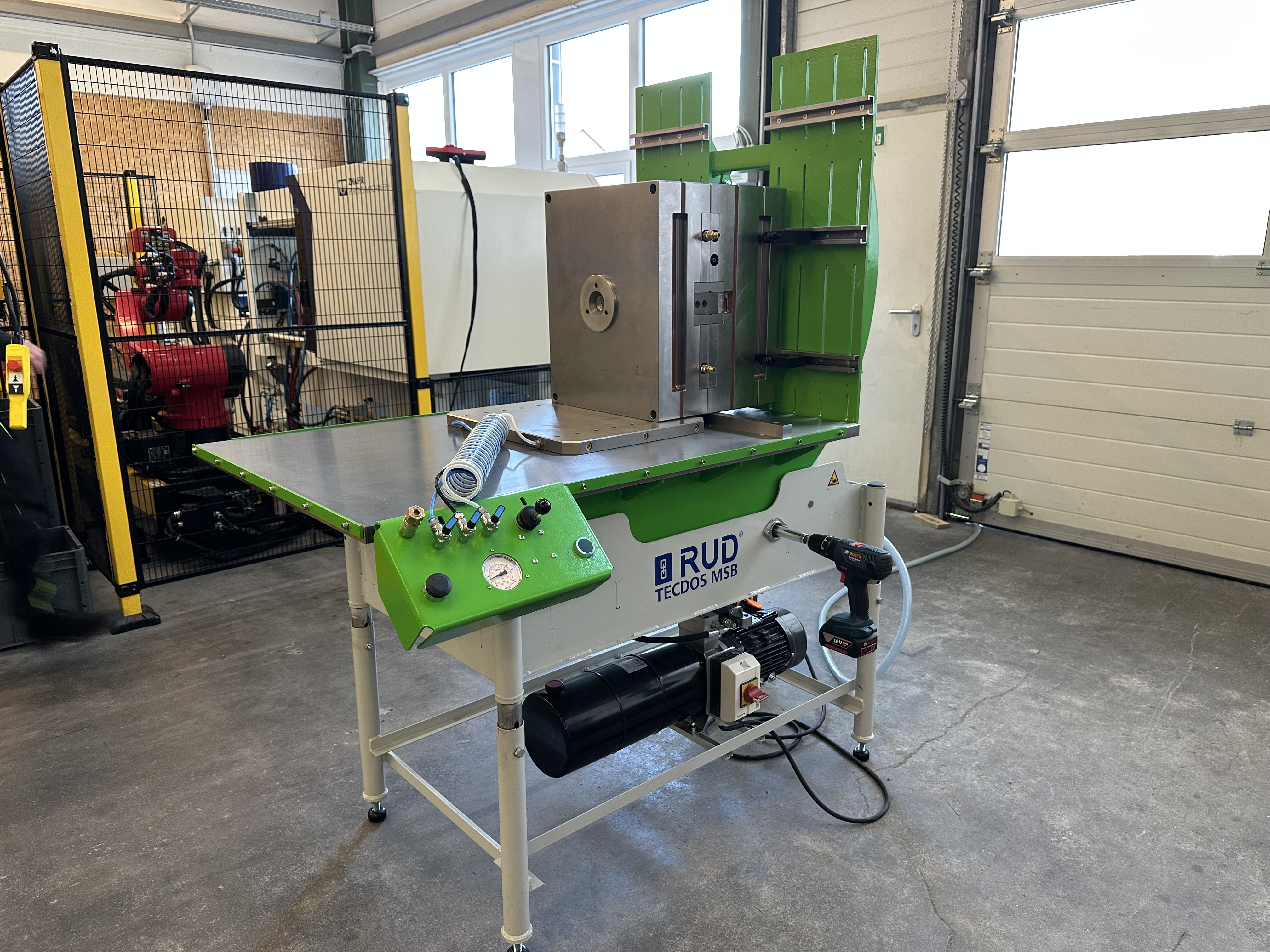
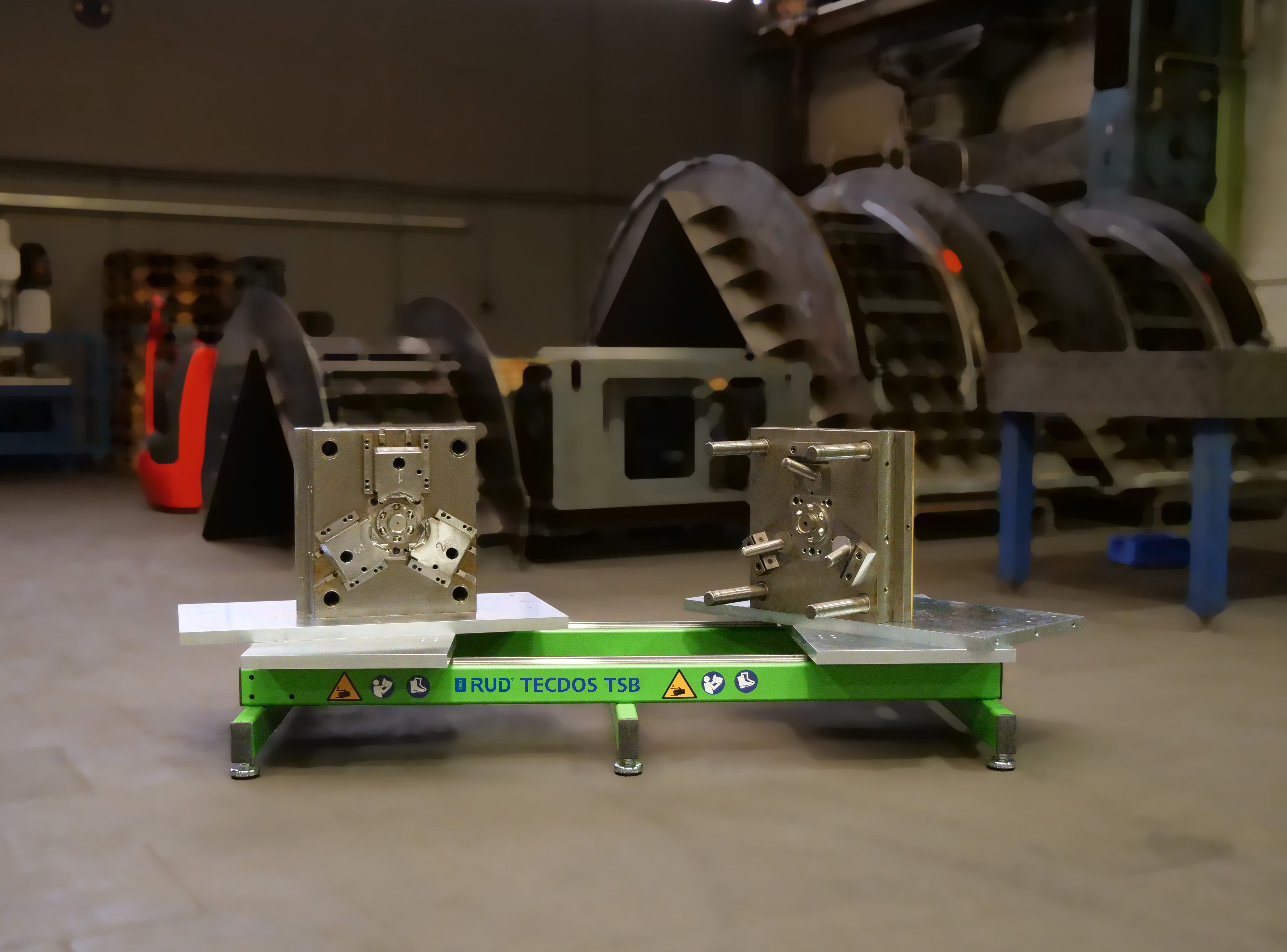
Not only turning, but also opening and closing large moulds can present challenges for staff.
For maintenance, cleaning or repair work, the two mould halves must be separated from one another and then brought back together again. Particularly with heavy tools, this process should be carried out as controlled as possible.
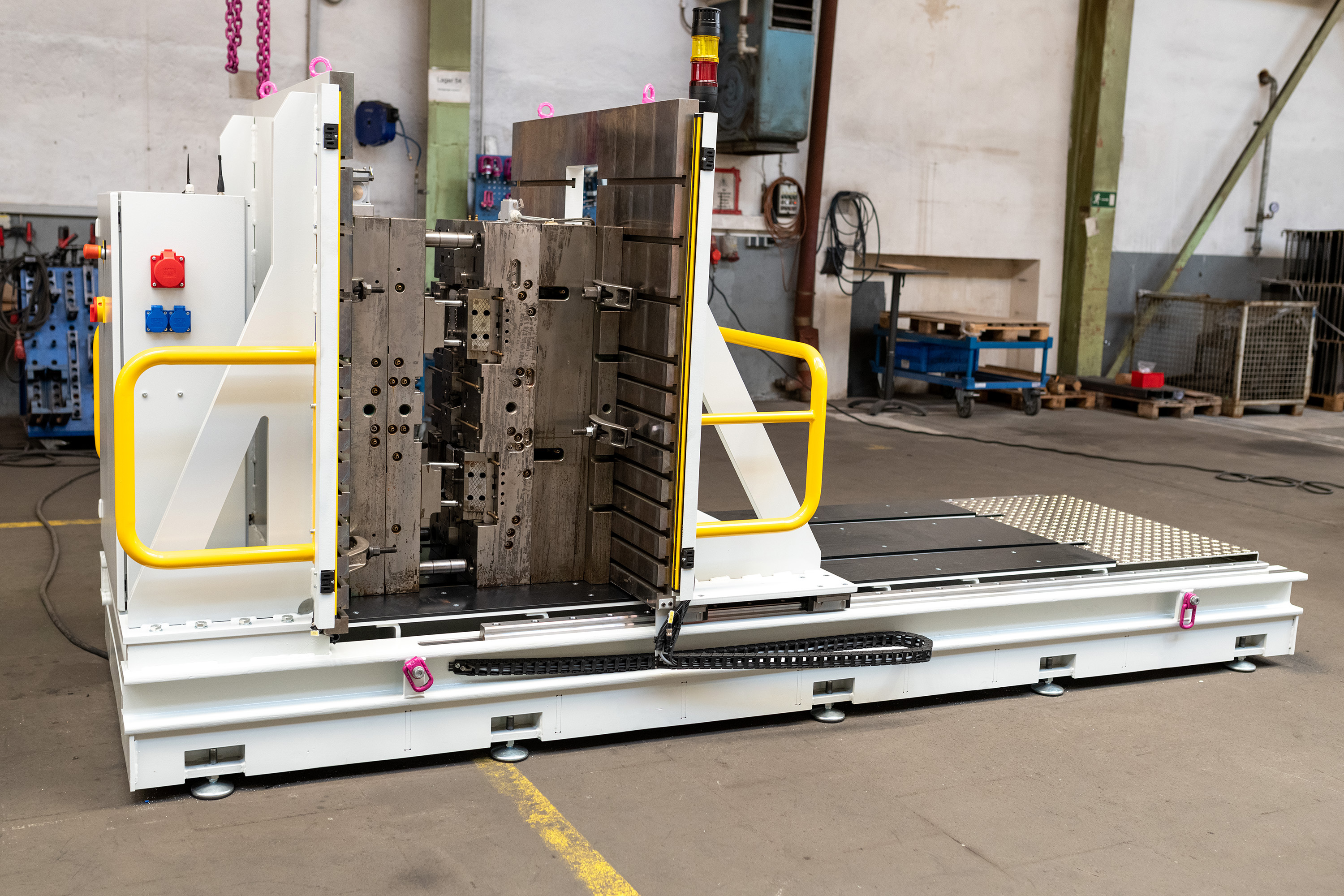
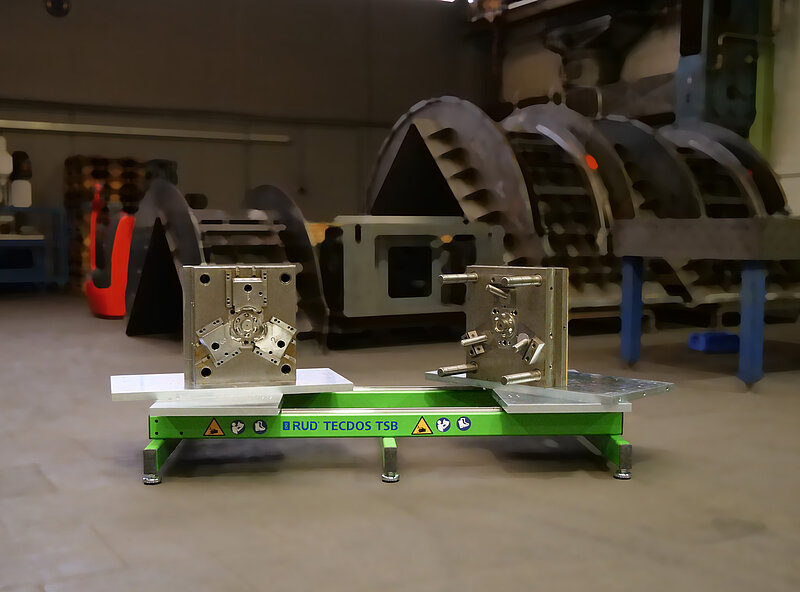
The RUD TECDOS TS supports the safe opening and closing of heavy moulds and tools.
This allows a work step, which might otherwise involve considerable manual effort, to be organised more systematically.
This brings benefits for maintenance teams when carrying out regularly recurring maintenance tasks. At the same time, plant managers can standardise the processes surrounding their moulds to a greater extent.
4. Considering occupational safety and Productivity together
Safety and Productivity are still sometimes viewed as opposites in industry. In mould handling, however, it is evident that a safely designed process can simultaneously offer economic advantages.
Standardised and controlled handling processes can, for example, help to make set-up and maintenance processes more efficient. At the same time, the risk of high-quality moulds being damaged by uncontrolled movements is reduced.
This leads to a different perspective for plant managers and senior management:
Investing in safe mould handling is not solely an investment in occupational safety – but also in process reliability and plant availability.
An efficient handling process can help to
- prevent workplace accidents and near-misses,
- reduce physical strain on staff,
- prevent damage to tools and moulds,
- standardise maintenance and set-up processes,
- reduce downtime and
- increase Productivity in the long term.
5. Viewing mould handling as an integrated system
A single Anchor point or a single lifting device does not in itself guarantee a safe process.
What is crucial is the interaction of all components: How is the mould attached? How is it lifted? How is it rotated or turned? Where is the employee positioned during the operation? And how is the mould subsequently positioned safely?
This is precisely where RUD Mold Handling’s systems-based approach comes into play.
Instead of considering individual components in isolation, slings, Anchor points and solutions for moving and turning heavy moulds can be coordinated with one another. This allows the entire handling process to be optimised in terms of safety, ergonomics and efficiency. RUD’s mould handling solutions take precisely this approach: heavy moulds should be moved, turned and positioned in such a way that maintenance work can be carried out as safely and ergonomically as possible.
What does this mean for different areas of responsibility?
For plant managers, the focus is on safe and reliable production operations. Safe mould-handling processes can help to reduce risks whilst improving the availability of tools and equipment.
For maintenance, practical solutions are paramount. Moulds must be made quickly accessible for maintenance and repair and be able to be moved reliably. Ergonomic and standardised processes make day-to-day work easier.
For management, cost-effectiveness is also a key consideration. Accidents at work, damage to tools and unplanned downtime can result in significant follow-on costs. Investments in safe handling processes should therefore always be considered from the perspective of long-term total cost of ownership.
Conclusion: Safe mould handling starts with the process
The crucial question is not simply: How do we move a heavy mould from A to B?
Rather, it is: How do we design the entire process so that people, tools and production are protected as effectively as possible?
Modern mould-handling solutions can help to reduce manual strain, make critical movements more controllable and enable staff to maintain a greater distance from heavy loads.
In this way, safety and ergonomics do not become an obstacle to Productivity – but rather a prerequisite for efficient and reliable processes.
Would you like to know how the handling of your moulds and tools can be made safer and more ergonomic?
Our RUD experts will work with you to analyse your individual handling processes and support you in developing a suitable solution for the safe movement and manoeuvring of heavy moulds.
Discover RUD’s mould handling solutions and take the next step towards greater safety, ergonomics and process efficiency.